For years, if you worked in search engine optimization, you knew that implementing FAQ schema was one of the quickest and most rewarding wins in the book. You added a few lines of structured data to your code, and almost overnight, your search listings expanded, click-through rates climbed, and your site visually dominated the mobile and desktop Search Engine Results Pages (SERPs).
But if you’ve been looking at your organic listings lately, you have probably noticed those expandable dropdown rows have completely vanished.
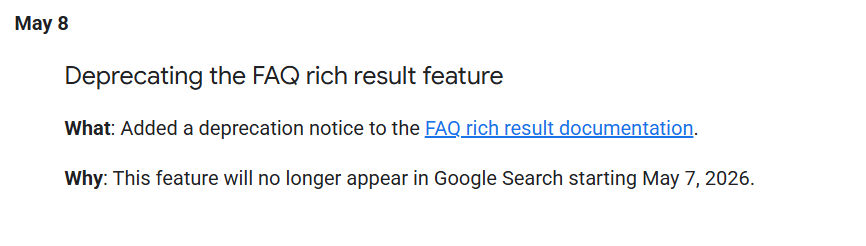
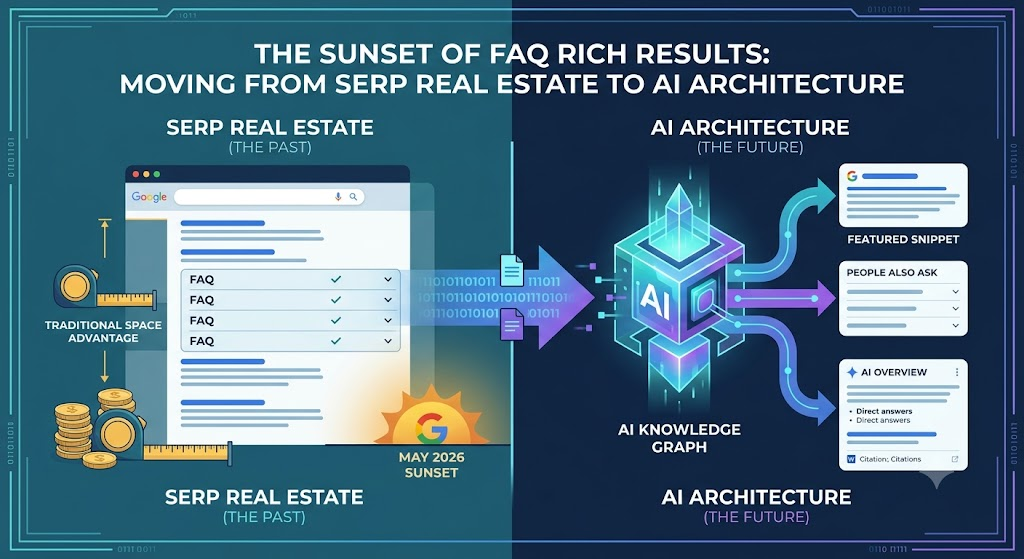
On May 7, 2026, Google officially ended FAQ rich results globally across all regular web listings. As an SEO professional, I look at this not as a loss, but as a massive indicator of where search is going. The era of using structured data as a visual shortcut to grab extra space on the search page is over.
Below, I am breaking down exactly what happened, why Google pulled the plug, and how you should shift your technical SEO strategy to stay visible in this new era.
1. The Deprecation Timeline: What Just Happened?
This shift didn’t happen overnight. Google actually began restricting FAQ rich results back in August 2023, when they limited the dropdown displays to highly authoritative health and government websites to clean up SERP clutter.
The May 2026 update simply completed that process by pulling the plug entirely, even for those previously exempt verticals. Per Google’s official developer documentation:
“FAQ rich results are no longer appearing in Google Search. We will be dropping the FAQ search appearance, rich result report, and support in the Rich results test in June 2026. Support for the FAQ rich result in the Search Console API will be removed in August 2026.”
Here is the exact sunset schedule we are navigating:
- May 2026: The FAQ dropdown rich results stopped appearing in search results completely.
- June 2026: FAQ search appearance reports were removed from Google Search Console, alongside support in the Rich Results Test tool.
- August 2026: API reporting support for FAQ rich results will be officially removed from Search Console.
2. Why Did Google Remove FAQ Snippets?
From my perspective, handling website optimization and organic growth strategies, Google’s reasoning comes down to two things: SERP clutter/abuse and the rise of AI search.
The Abuse of Rich Snippet Tools
When the FAQ schema became popular, many SEO tools began auto-generating questions and answers purely to manipulate search real estate. Instead of helping the user, many sites used it to shove competitor links down the page. When a structured data type stops faithfully describing a page and gets aggressively scaled for spam, Google historically retires it (just like they did with HowTo rich results and several other structured data types in recent years).
The Shift to Interactive AI Overviews
Google is actively moving away from traditional “blue-link” enhancements and investing heavily in the AI ecosystem. Expandable accordions belong to the old search model. Today, Google wants to pull information directly into its own dynamic interfaces, like AI Overviews and conversational answer boxes.
3. Should You Delete FAQ Schema From Your Code?
The short answer is no. I do not recommend stripping valid FAQ structured data from your web pages.
While the visible enhancement on Google’s main search page is gone, the background value of the data remains completely intact.
- Other Search Engines: Bing and alternative search tools can still parse this data and use it for their own rich layouts.
- Feeding AI LLMs: Large Language Models and search bots rely heavily on clear, structured data to understand exactly what a page is about. Leaving the markup intact helps Google’s AI systems quickly read, map, and potentially cite your page in conversational results.
- Zero Cost: Valid structured data that mirrors real text on the page does not cause ranking problems or technical errors; the server cost of leaving it in place is practically zero.
4. How to Pivot Your Strategy: The New Playbook
With visual shortcuts out of the equation, your organic growth strategy needs to mature. Here is how I am shifting search growth strategies for my clients to align with modern SEO practices:
1. Shift from Layout Tricks to Deep Topical Authority:
Phase 1.
Instead of adding thin FAQs just to grab extra space on the page, focus on building comprehensive, high-quality content clusters. Answer complex user queries directly within your content assets, validating your overall domain authority.
2. Map Conversational Long-Tail Keywords:
Phase 2.
Users are typing long, detailed questions rather than fragmented keyword strings. Keep writing FAQ content on your blogs and landing pages because it matches the exact conversational intent that feeds AI answer engines.
3. Audit Existing Schema Deployments:
Phase 3.
Run a technical SEO audit across your site. Ensure that your existing FAQPage schema matches the actual text on the page. Clean up any broken or malformed markup, and turn your attention toward optimizing other rich snippet types that are still highly visible, such as Product, Review, and Organization schema.
The Big Takeaway: The sunset of FAQ rich results marks the end of simple SERP real-estate manipulation, but it opens the door to building stronger digital identities through highly structured, expert-driven answers.